
Four developments carried monk fruit extract from a regional botanical to a specification-traded global sweetener in roughly fifteen years. Regulatory permission arrived market by market. An identity and purity specification appeared, so buyers could purchase it on paper. Production moved out of its original growing district. Yield and extraction gains brought the cost per unit of sweetness down.
Three things have not moved with them. European Union access remains unresolved, published market forecasts disagree with each other by large multiples, and the crop still arrives in a single annual harvest window. For a team deciding whether monk fruit belongs in a pipeline that ships in twelve to thirty-six months, those constraints carry more weight than any growth chart. This article separates the durable signals from the noise, lists the evidence worth requesting from any supplier, and closes with a qualification checklist.
The case for monk fruit rests on changes that leave a public record. Each one can be traced to a regulator's decision or a dated company disclosure, which is what separates a durable shift in supply from a wave of consumer interest.
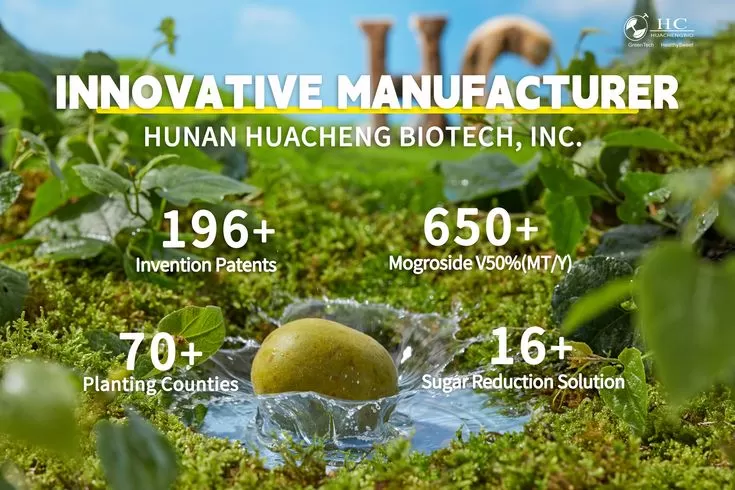
Monk fruit did not enter global trade through a single approval. In the United States, FDA closed its first no-objection letter for Luo Han Guo (Siraitia grosvenorii Swingle) fruit extract with GRN 301 in January 2010, and further notices followed. By the time Australia and New Zealand assessed the ingredient, their regulator recorded four separate GRAS determinations on the US register: GRN 301, 359, 522 and 556, each for use as a sweetener and flavour enhancer under good manufacturing practice. Health Canada approved it for table-top sweeteners with a maximum use level calculated as 0.8% expressed as mogroside V in the finished product. Japan lists rakanka extract on its List of Existing Food Additives, exempting it from the new-additive designation system. China lists it in GB 2760-2015. Huacheng Bio is the notifier of GRN 556, filed in December 2014 and closed in June 2015, covering use as a table-top sweetener and general purpose non-nutritive sweetener in foods other than infant formula and meat and poultry products.
The decision consequence for your portfolio is simple to state and easy to overlook: permission is granted per market, per category, and sometimes per use level. Build the launch plan country by country, with the instrument named in writing.
A plant extract becomes a tradable commodity when two buyers can compare it without tasting it. Three things did that for monk fruit. Mogroside V became the accepted marker compound. HPLC became the routine quantitative method. And a recognised identity and purity monograph exists: when Food Standards Australia New Zealand assessed monk fruit extract, it noted that no Codex specification needed writing because one already existed in the Food Chemicals Codex published by the United States Pharmacopeial Convention.
That is why two quotations are now comparable before a gram ships. Mogroside V percentage, HPLC method, sweetness multiple, particle size, heavy metal limits, and microbiological limits all sit on one sheet. Huacheng Bio publishes the full H2-Luo range on that basis — extract powder from 1.5% to 98% Mogroside V, concentrated juice from 1% to 10%, and blend sweeteners at one to four times sugar — covering applications from beverages to table sugar.
Commercial monk fruit was concentrated in a narrow subtropical band around Guilin in Guangxi, and that concentration set the market's early ceiling. Supply has loosened through deliberately engineered routes: virus-free tissue-culture seedlings that deliver higher mogroside content and uniform fruit, contract farming with cooperatives and individual growers, and — importantly — processing capacity built near the new plantings. One industry account notes Guilin acreage was already under pressure from expanding sugar orange cultivation, which gave processors a concrete reason to develop growing areas in neighbouring provinces.
| Year | Recorded step | What it tells a buyer |
|---|---|---|
| 2019 | Mogroside V 50% capacity reached 300 MT per year | A dated baseline, so later claims can be checked against it. |
| 2022 | Total Mogroside V 50% capacity 500 MT per year | Capacity roughly doubled over three years. |
| 2023 | Shaoyang phase I opens in Hunan: 50,000 MT fresh fruit and 9,000 MT concentrated juice per year | Processing was built close to the new plantings, so fruit no longer has to travel to a single site. |
| 2024 | Total Mogroside V 50% capacity 650 MT per year | The headline ingredient figure used in current specifications. |
| 2025 | Rongjiang base opens in Guizhou: 30,000 MT fresh fruit processed per year | A fourth production region, further from the original growing district. |
| Current | Blend sweetener line at 15,000 MT per year with OEM service | Blended formats have dedicated capacity separate from the extract lines. |
Monk fruit's cost disadvantage is a function of two ratios: how much mogroside is in a unit of fruit, and how much of it the extraction recovers. Huacheng Bio has published movement on both — average mogroside content in its fruit rose from 0.35% in 2005 to 0.43% in 2018, while extraction yield moved from 85% to 95% per 100 kg of fruit. More sweet compound per hectare and less lost in processing lower cost per unit of sweetness without changing the price of anything else.
Huacheng Bio has published two goals on the same point: bringing monk fruit cost in use below 1.5 times that of sucrose, and below 40% of the use cost of erythritol or allulose, with parity with sucrose as the longer-term aim.
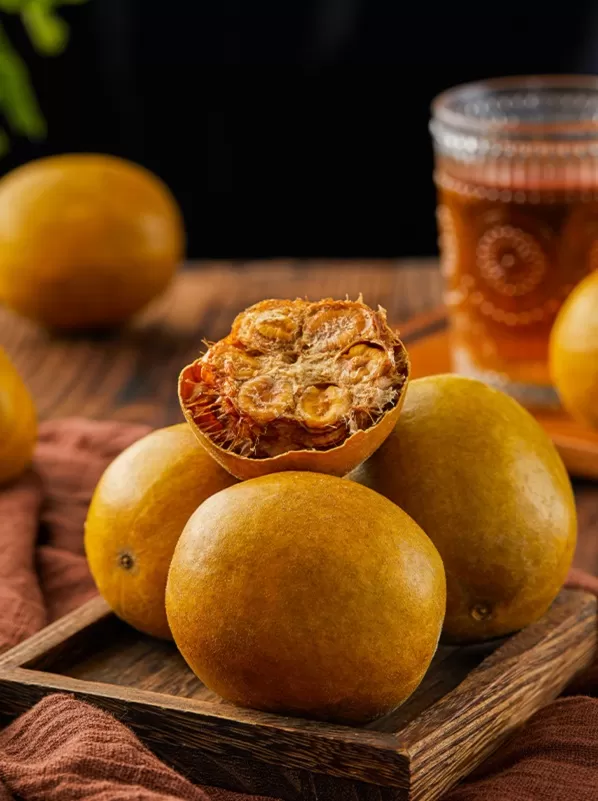
Momentum in aggregate hides four constraints that shape individual launch decisions. All four are checkable, and none of them are solved by choosing a different supplier.
| Constraint | What it changes for you | What to confirm before committing |
|---|---|---|
| European Union access | A US GRAS determination does not transfer to the EU. EFSA concluded in 2019 that the data before it were insufficient to reach a safety conclusion on monk fruit extract as a food additive, so plan EU entry as its own regulatory project with its own timeline. | The current EU position for your exact category and use level, reviewed by your regulatory team. |
| Health positioning | WHO's 2023 guideline conditionally recommends against using non-sugar sweeteners for weight control, based on a systematic review that found no long-term benefit for body fat and possible associations with type 2 diabetes, cardiovascular disease and adult mortality. The evidence was assessed as low certainty, the recommendation excludes people with pre-existing diabetes, and low-calorie sugars and polyols fall outside it. WHO's definition covers naturally derived non-nutritive sweeteners; whether it reaches your finished product needs a jurisdiction-specific reading. | Which claims survive review in each market, and whether your packaging copy relies on a benefit the guideline questions. |
| One harvest window | Fresh monk fruit is perishable and arrives largely in autumn. Huacheng Bio reported purchasing 28,000 tonnes of fresh fruit across September and October in one recent season. Processing capacity is sized in fresh-fruit tonnes for this reason, and pricing tends to follow the crop year. | Inventory policy between crops, allocation rules for new customers, and whether quoted lead time starts at order, at sample approval, or at deposit. |
| Specification spread | The category name hides an order of magnitude. Two quotations for "monk fruit extract" can differ enormously in the sweetness each delivers, so comparing price per kilogram alone produces the wrong answer. | Exact Mogroside V percentage, HPLC test method, sweetness multiple, and a batch-linked certificate of analysis for the grade being quoted. |
Search for the size of the monk fruit market and you will get base-year values that differ from one another several-fold, with growth rates running from high single digits to more than twenty percent for what appears to be the same category. The divergence is mostly a scope artifact rather than a dispute about the future. Some counts measure purified mogroside sold as an ingredient. Others measure retail-format sweetener packs that merely contain monk fruit. Base years differ, geographically defined segments differ, and few vendors publish their definitions alongside their figures.
There is no way to reconcile those numbers into a planning assumption, so use them as direction of travel and plan on evidence that carries a date and a source.
| Signal worth planning with | What it settles | How to verify it |
|---|---|---|
| A named permission in your target market | Whether the ingredient can legally be used in your category at your use level | Regulator database or standards text, cited by GRN number, code entry, or standard reference |
| Dated capacity additions from your supplier | Whether its supply has actually tracked demand | Company profile, industry chain documentation, facility announcements, then a current per-grade availability request |
| A current specification and a batch-linked COA | Whether two quotations are comparable at all | Request both documents for the exact grade before any price comparison |
| Cost per unit of sweetness in your own base | Whether the switch pays at your inclusion rate | Bench trial at matched sweetness against sucrose and against your current high-intensity option |
| Switching cost | Whether qualification is worth starting now | R&D time, line changes, label artwork, and any customer re-approval your launch requires |
The following questions take about one email exchange to answer and remove most of the uncertainty above.
Send your target market, product category, and reduction goal. We can confirm which H2-Luo format and Mogroside V grade fits, supply the current specification and documentation for that grade, and outline how crop-year coverage is handled before you plan a trial.
Request a supply and documentation reviewPermission is market-specific. In the United States, Luo Han Guo fruit extract has multiple FDA GRAS notices with no-objection letters, including GRN 556, notified by Huacheng Bio for use as a table-top and general purpose sweetener. Health Canada permits it in table-top sweeteners with a calculated maximum use level. Japan lists rakanka extract as an existing food additive, and it appears in China's GB 2760-2015. The EU position remains open after EFSA's 2019 finding of insufficient data. Confirm each market with your own regulatory reviewer, referencing the named instrument.
None of them, in isolation. The published figures use different scopes — some measure purified mogroside sold as an ingredient, others measure finished retail sweetener packs containing monk fruit — and they use different base years. Plan with supplier-level evidence instead: dated capacity records, current specifications, batch certificates, and your own cost-per-sweetness trial.
It affects how you position any finished product containing a non-nutritive sweetener. WHO conditionally recommends against using non-sugar sweeteners for weight control, based on low-certainty evidence, and excludes both people with pre-existing diabetes and low-calorie sugars and polyols. Its definition covers naturally derived non-nutritive sweeteners. Settle it with a market-by-market claim review before artwork is approved.
Supply has expanded through new growing districts and additional processing regions, and blend formats run on dedicated lines. Price remains exposed to the annual crop because the fruit is perishable and concentrated into an autumn harvest. Ask how inventory is held between harvests, how new customers are allocated during a tight crop, and what triggers a price revision.
Ask for Mogroside V percentage, the HPLC test method and its associated standard, the sweetness multiple used for quoting, particle size, heavy metal and arsenic limits, and microbiological limits. Then request a certificate of analysis from a recent commercial lot. For any certificate you depend on, the accompanying quality documentation should name the issuing body, scope, validity dates, and the site it covers.







 EN
EN EN
EN CN
CN ES
ES PT
PT SV
SV DE
DE TR
TR FR
FR AR
AR BG
BG HR
HR CS
CS DA
DA NL
NL FI
FI EL
EL HI
HI IT
IT JA
JA KO
KO NO
NO PL
PL RO
RO RU
RU CA
CA TL
TL IW
IW ID
ID LV
LV LT
LT SR
SR SK
SK SL
SL UK
UK VI
VI SQ
SQ ET
ET GL
GL HU
HU MT
MT TH
TH FA
FA AF
AF MS
MS GA
GA BE
BE UZ
UZ